Schacksnack presenterar artiklar, nyheter, partier, problem och studier. Besökarna erbjuds även möjlighet att lämna kommentarer och diskutera runt dessa ämnen.
Schacksnack har en ny omröstning längst upp i högerspalten. Frågan gäller huvuvida Gideon Ståhlberg, Ulf Andersson eller Nils Grandelius är att betraktas som Sveriges genom tiderna starkaste schackspelare. Det finns ju lite olika måttstockar att beräkna detta genom till exempel ratingprestationer, hårt motstånd över tid eller hur vederbörande har bidraget till schackets utveckling. Beroende på perspektiv och hur insatt man är i denna komplexa fråga kan svaren skifta. Vad säger Schacksnacks läsare?
Sverigemästarklassen och övriga grupper arrangeras i Uppsala 27 juni - 6 juli. Tio spelare kämpar om Sverigemästartiteln och dessa är i ratingordning: GM Platon Galperin, IM Isak Storme, IM Jung Min Seo, GM Erik Blomqvist, IM Martin Lokander, GM Tiger Hillarp Persson., IM Milton Pantzar, IM Hampus Sörensen GM Jonny Hector och IM Axel Falkevall. SM-gruppen är i år stark och öppen så nästan vem helst kan ta hem segern men det skulle inte vara osannolikt om GM Jonny Hector avgår med segern. I SM-sammanhang brukar gedigen erfarenhet väga mycket tyngre än tillfälliga ratingtoppar. Mästar-Elit: IM Michael Wiedenkeller, IM Ludvig Carlsson, IM William Olsson, FM Eric Thörn, IM Tommy Andersson, IM Bengt Lindberg, FM Joar Östlund, FM Alexander Ström-Engdahl, Andreas Landgren och Harald Ljung. Mitt stalltips är att FM Joar Östlund som är en starkt utvecklande spelare kommer att avancera till Sverigemästarklassen.
KommenteraSchacksnack har inlett det nya året med en ny omröstning. Frågan gäller huruvida du föredrar Fischer Random, där pjäserna slumpas på den sista raden, eller om du föredrar europeiskt schack som det har spelats sedan 1500-talet och där det på förhand är bestämt att vit dam ska stå på ruta d1. Det förstnämnda alternativet har fördelen att kreativiteten ökar i spelöppningsfasen, medan det senare alternativet har för- eller nackdelar, beroende på hur man ser på det, i och med att man måste kunna och förstå en mängd spelöppningar och varianter. Rösta en gång på svarsalternativ 1 eller 2 i högerspalten nedan.
KommenteraDen sjunde upplagan av Sinquefield Cup börjar idag och nyheten för året är att tävlingen, som för övrigt är den starkaste i U.S.A, spelas med 12 deltagare istället för 10. I första ronden har vi dessa möten: Ding Liren-Wesley So, Levon Aronian-Maxime Vachier-Lagrave, Magnus Carlsen-Anish Giri, Ian Nepomniachtchi-Wiswanathan Anand, Hikaru Nakamura-Fabiano Caruana och Sergej Karjakin-Shakhrijar Mamedjarov. Carlsen är givetvis stor favorit och vill förstås revanschera sig efter att inte ha tagit de snabbare partierna, som spelades för några dagar sedan, på blodigt allvar. Det lär han dock göra denna gång om han inte ska förlora sitt anséende som världsmästare och undvika förödmjukande skriverier i norsk massmedia som inte riktigt förstår skillnaderna på blixtschack, snabbschack och klassiskt schack. Enligt Carlsen är det nämligen den sistnämnda spelformen som är den seriösaste. Sinquefield Cup saknar dock tyvärr dragserie vilket skulle ha lyft den spelformen ett steg i rätt riktning. Chris Bird är tävlingsledare
Läs de 3 kommentarernaIdag börjar Sverigemästarklassen sina tävlingar under SM i Eskilstuna. Lottningen i första ronden: GM Jonny Hector- GM Pontus Carlsson, FM Kaan Kücüksan-GM Axel Smith, IM Linus Johansson-GM Tiger Hillarp Persson, GM Pia Cramling-IM Rauan Sagit, GM Erik Blomqvist-IM Michael Wiedenkeller. SM-gruppen är både stark och öppen så vem helst kan ta hem segern. En farlig uppstickare som Kücüksan kan absolut inte räknas bort. Det var längesedan vi hade ett sådant jämnt SM och detta beror på att GM Nils Grandelius och GM Hans Tikkanen inte är med och kämpar om Sverigemästartiteln. Den förstnämnde har inte rosat SM-marknaden, som han borde, med tanke på sin super-GM-status, och Tikkanen är säkert mätt på SM-titlar och har andra prioriteringar.
Mästar-Elit: FM Harald Lögdahl-IM Dan Cramling, FM Erik Malmstig-IM Tommy Andersson, IM Bengt Lindberg-Anders Wengholm, Joakim Nyander-FM Jung Min Seo, FM Tom Rydström-GM Thomas Ernst. Mitt stalltips är att Lindberg blir en tuff nöt för de övriga deltagarna att knäcka.
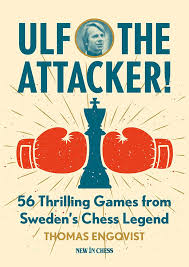
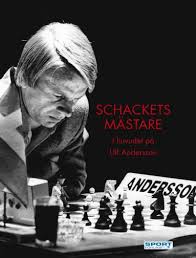
Läs de 8 kommentarernaEn svensk schackbok - Schackets mästare - I huvudet på Ulf Andersson - har äntligen skrivits om Ulf Anderssons makalösa bedrifter i schackvärlden. Glenn Ek på Sportförlaget i Västerås visade ett genuint intresse efter en förfrågan av författarna. Schack har de senaste årtiondena alltmer betraktats som en sport med den snabbare betänketiden så schack bör klassificeras även i det facket. Andra populära kategorier är annars spel, vetenskap eller konst. Frilansjournalisten och schackälskaren Robert Okpu har tillsammans med språkläraren och IM Thomas Engqvist arbetat med boken i ur och skur och den har sänts till tryckeriet och planeras att säljas under SM i Eskilstuna 5 juli. På Schack.se finns djupintervjuer med Okpu och Engqvist som var för sig ansvarat för biografi- respektive partidel. Det finns också en fotodel med fotografier som de flesta aldrig har sett tidigare. Boken bör alltså tilltala tre kategorier, de som gillar biografier, de som vill se Uffes angreppspartier med moderna, pedagogiska kommentarer och de som vill se de nya fotografierna. Den boken som saknats i den svenska schacklitteraturen har alltså äntligen skrivits....
Läs kommentarenEn av världens genom tiderna starkaste spelare, Ex-världsmästaren Vladimir Kramnik, 43 år, har på Tata Steel-turneringens hemsida meddelat att han avslutat sin professionella karriär. Bakgrunden är att han tycker han uppnått allt som kan uppnås som schackspelare och nu vill ägna sig åt att undervisa schack för barn. Han nämner att det han varit med om som schackspelare varit ovärderliga mänskliga erfarenheter. Vi som följt Kramniks schackkarriär och upplevt milstolpen i schackhistorien när han besegrade Kasparov år 2000, med remivapnet Berlinvarianten i Spanskt, får vara tacksamma och nöjda över alla de partierna han producerat ända fram tills nu och önska honom lycka till och all välgång med sina framtida projekt.
KommenteraAlingsås Schacksällskap fyller 100 år 2019 och som ett led i firandet kommer det att arrangeras en parturnering i Alingsås 4-5 maj.
Idag - 26 januari - är det premiär för turneringshemsidan.Jonas Dahlgren
Where do the best middlegame ideas actually come from? In this lesson GM Mihail Marin follows one positional idea across sixty years — from a game almost nobody has seen to a plan that today sits in mainstream Hedgehog theory.
Artur Yusupov’s revolutionary …Bd8 against Taimanov in 1982 was hailed as new — yet Yusupov himself credited Fischer’s 1970 win over Ulf Andersson in Siegen. Digging deeper, Mihail finds the very same maneuver in Grigorian–Agzamov (1981) and Treybal–Flohr (1934) — and finally in an astonishing 1922 game where Friedrich Sämisch reached what may be the first genuine Hedgehog structure in history and found the plan with no theory and no reference points, sixty years before it had a name.
Were these players thinking independently, or is there an invisible thread — ideas passed between masters, carried across borders by trainers and journalists like Salo Flohr? Either way the practical lesson is the same: the classics still hold fresh ideas for your own games.
Welcome to the first course in Chesslovers Advanced, our premium membership for ambitious players seeking a deeper understanding of chess. This course is focused entirely on the individual characteristics and special qualities of each chess piece.
This video is devoted entirely to the king – the most unique piece on the chessboard. Beyond the familiar themes of king safety, we also explore the king as an active fighting piece and examine advanced strategic concepts such as opposition, stalemate, and the king’s changing role throughout the different phases of the game.
You will learn:
• How to think about the king in the opening, middlegame, and endgame.
• When the king should remain safe – and when it must become an active participant.
• The strategic principles behind opposition, triangulation, and stalemate.
• Which great masters are the best models for studying king play.
• The unique characteristics that distinguish the king from every other chess piece.
Rather than simply presenting theory, this course demonstrates how to develop your chess understanding through carefully selected examples from classical chess literature.
A central part of the video is based on The King Saves the Day by Sergei Tkachenko, whose outstanding studies beautifully illustrate the king’s hidden strength and remarkable potential. By solving and analysing these studies, you will not only deepen your understanding of king play but also learn an effective method of improving your overall chess strength through systematic study.
Chesslovers Advanced is designed for ambitious players who want to go beyond opening knowledge and tactical patterns to master the deeper strategic ideas and principles that define classical chess.
In this Chesslovers Academy lesson, we explore the most effective ways to train and improve as a chess player.
The video is inspired by ideas from Davorin Kuljasevic’s excellent book How to Study Chess on Your Own, where he presents 15 different training methods. In this lesson, I analyse these methods from my own experience and training perspective, highlighting the approaches that I believe provide the greatest practical value.
Rather than simply listing different methods, this lesson focuses on the key question:
Which training methods actually help players develop stronger chess skills? I present seven methods that
I consider especially effective and explain how they can be used depending on your own ambitions, available time, and current playing level.
The goal is not to provide one single training formula, but to help you become more aware of proven training approaches so that you can build a more effective and personalised chess improvement plan.
Whether your ambition is to improve your tournament results, deepen your understanding of chess, or simply train in a more structured way, these methods can help you make better use of your study time.
This is an essential lesson for ChessLovers Academy members who want to move from simply playing chess to deliberately developing their chess strength.
”Part of the Chesslovers Academy programme – focused on transforming chess knowledge into practical playing strength.”
This channel is built around one simple idea: becoming a truly strong chess player is not about memorising endless variations or simply playing thousands of games. Improvement comes from a process.
A strong chess player develops through three important steps.
Step one: Learn from the greatest chess books ever written. The foundation of chess improvement is high-quality knowledge.
But reading a chess book is not enough. Real learning means studying actively. It means making notes, underlining important ideas, highlighting key passages, returning to important chapters, and repeatedly revisiting the concepts that can transform your understanding of the game.
The right chess books can teach you strategic thinking, positional concepts, middlegame ideas, endgame principles, and opening knowledge. But the knowledge must be absorbed properly.
Step two: Turn information into practical knowledge.
This is where many players struggle.
Knowing a concept is one thing. Applying it during a real game is something completely different.
That is why we created Chesslovers Academy.
Chesslovers Academy is the first membership level of this channel, focused on application: transforming chess theory into practical playing strength.
Here we explore how to use your knowledge over the board.
We will discuss training methods, tournament preparation, chess psychology, and practical decision-making during a game.
Because playing chess is not only about calculating variations and evaluating positions..
A real tournament game involves much more:
How do you handle pressure?
How do you manage your emotions?
How do you respond to your opponent’s behaviour?
How do you use your time on the clock?
How do you deal with uncomfortable playing conditions?
How do you stay focused when the position becomes difficult?
These are the skills that separate strong players from average players.
Chesslovers Academy is about learning how to apply what you know.
Step three: Deep understanding and advanced improvement.
For players who want to go further, we introduce Chesslovers Advanced.
This level is about deeper study and serious improvement.
Here we will create advanced courses based on some of the greatest chess books ever written, including classics such as My System and many other important works.
We will explore advanced middlegame strategy, opening courses, endgame technique, and deeper chess concepts that can take your understanding to another level.
So the structure of Chesslovers is simple:
The free level: Chess Literature Discover the best chess books and build your foundation.
Level One: Chesslovers Academy – $5 per month
The focus is application: turning theory into practical strength.
Level Two: Chesslovers Advanced – $10 per month
Deep study, advanced courses, and complete chess development.
If you love chess books, if you want to understand middlegame theory, endgame principles, opening ideas, and the methods used by serious chess players to improve, then Chesslovers is the place for you.
Join us on this journey — from reading chess knowledge, to understanding chess, to playing stronger chess. Welcome to Chesslovers.
In this video, International Master Thomas Engqvist presents his 91st recommended chess endgame book: 2020 Endgame Maze.
What makes this book particularly interesting is that all the games were played during the pandemic in 2020. As a result, many of the examples come from online rapid and blitz games, reflecting the practical endgame challenges faced by today’s players.
The authors from the Informator team in Belgrade, Serbia, divide the material into four sections: pawn endings, minor-piece endings, rook endings, and queen endings, providing a comprehensive guide to the most important endgame types.
One of the book’s standout features is its treatment of queen and two pawns versus queen. This notoriously difficult ending is explained through numerous instructive examples from both the attacking and defending sides.
The section on rook endings spans around 70 pages and includes many examples of the Lucena position, one of the fundamental winning techniques every serious chess player should know.
Suitable for beginners, club players, tournament competitors and professionals alike, this book offers practical instruction and a wealth of instructive examples to improve your endgame play.
Learn chess from one of the greatest players in history. In this episode of Know Time, Viswanathan Anand shares practical chess lessons for beginners and experienced players alike, covering openings, strategy, calculation, psychology, and the habits that separate strong players from the rest.
What makes a good chess opening? How should beginners study chess? Are openings more important than tactics? How has modern chess changed because of engines and AI? Anand explains the principles behind strong play rather than just memorizing moves, offering timeless advice for anyone looking to improve.
Whether you’re just learning chess, climbing the online rating ladder, or competing in tournaments, this conversation is packed with insights from a five-time World Chess Champion.
In this episode:
Chess openings every player should understand
Common mistakes beginners make
Strategy vs tactics in chess
How to think during a game
Developing calculation and visualization
The role of intuition in chess
Chess psychology and decision-making
How AI and chess engines changed preparation
Advice for improving at every level Lessons from a World Champion
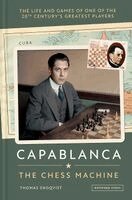
What can chess players today learn from the enigmatic player José Raúl Capablanca, the third World Chess Champion and one of the greatest strategic minds in chess history?
In this 18-minute video, International Master Thomas Engqvist introduces his new book, Capablanca – The Chess Machine, published by Batsford on 6 August 2026.
Rather than simply presenting Capablanca’s greatest games, the book explores the ideas behind his chess and traces the development of his key strategic concepts throughout his career. From exchanges and initiative to pawn formations, strategic transformation and endgame technique, Capablanca’s games reveal principles that remain highly relevant to modern players.
In an age of engines, opening databases and endless variations, Capablanca offers something different: clarity, understanding and the ability to see the deeper logic of a position.
Whether you are a club player, tournament competitor, coach, student of chess or simply fascinated by the history of the game, this video explores why Capablanca’s chess continues to matter — and what his thinking can teach us today.
Capablanca – The Chess Machine by Thomas Engqvist is published by Batsford on 6 August 2026.
As an International Master in chess, I believe the answer depends on much more than tactics and individual brilliance. In this video, I explain why Argentina’s exceptional team spirit, winning mentality and shared purpose could make the difference.
Watching Argentina reminded me of many of the same qualities that create successful chess teams: trust, unity, resilience and a common strategic vision. I also reflect on why chess and football have far more in common than most people realise, and why both sports could learn valuable lessons from one another.
Magnus Carlsen’s appearance in the crowd during Norway’s crucial match against England is a reminder that the world’s greatest chess player also appreciates elite football.
Do you agree with my prediction?
Can football learn from chess? Can chess learn from football? I’d love to hear your thoughts in the comments.
In this video, GM Felix Blohberger analyses the important theoretical rook endgame: four versus three pawns on one side. This rook endgame is quite important, since it often arises in our games.
My System by Aron Nimzowitsch is, in my opinion, the greatest chess book ever written. But with several English editions now available, which one should you read?
In this in-depth comparison, I examine the major English editions of this timeless chess classic, including:
• Philip Hereford’s translation (Batsford, 1987) – based on the original text
• Alex Fishbein’s FastTrack Edition (Russell Enterprises, 2024)
• Hays Publishing edition (1991)
• Quality Chess edition (2007)
I discuss the strengths and weaknesses of each version, who they are aimed at, and whether modernised editions improve upon the classic translation.
I also explain why I believe My System remains the finest chess book ever written. The first part of the book is accessible to beginners and improving club players, while the second part offers profound strategic insights for experienced tournament players.
World-class trainer Artur Yusupov has also described My System as the greatest chess book ever written. Nimzowitsch’s revolutionary ideas on prophylaxis, overprotection, blockade and positional play profoundly influenced World Champions such as Tigran Petrosian and Anatoly Karpov, and continue to shape modern chess strategy today.
If you’ve ever wondered which edition deserves a place on your bookshelf, this video is for you.




 Laddar ...
Senaste kommentarer