mar 29
Här följer en mycket sevärd intervju med Mikhail Tal från 1988. Intervjun sändes i rysk TV men är översatt till engelska.

Erbjudanden
Foto: Lars OA Hedlund Mer information om schacklektioner Mobil: 0730316558 E-postadress: thomasengqvist@protonmail.com 
CAPABLANCA: THE CHESS MACHINE av IM Thomas Engqvist – Förbeställ boken på Adlibris.com eller Bokus.com 
THE SCANDINAVIAN DEFENSE REVISITED av IM Thomas Engqvist – Beställ boken på Adlibris.com eller Bokus.com 
ULF THE ATTACKER – Beställ boken på Adlibris.com eller Bokus.com 
THE CARO-KANN THE EASY WAY – Beställ boken på Adlibris.com eller Bokus.com 
CHESS LESSONS FROM A CHAMPION COACH – Beställ boken på Adlibris.com eller Bokus.com 
300 MOST IMPORTANT CHESS EXERCISES – Beställ boken på Adlibris.com eller Bokus.com 
300 MOST IMPORTANT TACTICAL CHESS POSITIONS – Beställ boken på Adlibris.com eller Bokus.com 
SCHACKETS MÄSTARE – Beställ boken på Adlibris.com eller Bokus.com 
300 MOST IMPORTANT CHESS POSITIONS – Beställ boken på Adlibris.com eller Bokus.com 
RETI – Beställ boken på Adlibris.com eller Bokus.com 
CHESS STRATEGY FOR KIDS – Beställ boken på Adlibris.com eller Bokus.com 
STEIN – Beställ boken på Adlibris.com eller Bokus.com 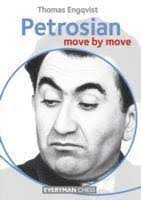
PETROSIAN MOVE – Beställ boken på Amazon.se eller AbeBooks.co.uk Live Chess Ratings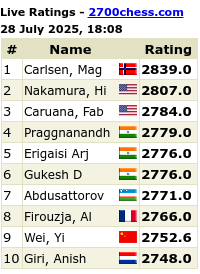
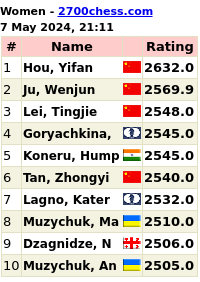 |
Kommentera
Schacksnack har en ny omröstning längst upp i högerspalten. Frågan gäller huvuvida Gideon Ståhlberg, Ulf Andersson eller Nils Grandelius är att betraktas som Sveriges genom tiderna starkaste schackspelare. Det finns ju lite olika måttstockar att beräkna detta genom till exempel ratingprestationer, hårt motstånd över tid eller hur vederbörande har bidraget till schackets utveckling. Beroende på perspektiv och hur insatt man är i denna komplexa fråga kan svaren skifta. Vad säger Schacksnacks läsare? Kommentera
Sverigemästarklassen och övriga grupper arrangeras i Uppsala 27 juni - 6 juli. Tio spelare kämpar om Sverigemästartiteln och dessa är i ratingordning: GM Platon Galperin, IM Isak Storme, IM Jung Min Seo, GM Erik Blomqvist, IM Martin Lokander, GM Tiger Hillarp Persson., IM Milton Pantzar, IM Hampus Sörensen GM Jonny Hector och IM Axel Falkevall. SM-gruppen är i år stark och öppen så nästan vem helst kan ta hem segern men det skulle inte vara osannolikt om GM Jonny Hector avgår med segern. I SM-sammanhang brukar gedigen erfarenhet väga mycket tyngre än tillfälliga ratingtoppar. Mästar-Elit: IM Michael Wiedenkeller, IM Ludvig Carlsson, IM William Olsson, FM Eric Thörn, IM Tommy Andersson, IM Bengt Lindberg, FM Joar Östlund, FM Alexander Ström-Engdahl, Andreas Landgren och Harald Ljung. Mitt stalltips är att FM Joar Östlund som är en starkt utvecklande spelare kommer att avancera till Sverigemästarklassen. KommenteraSchacksnack har inlett det nya året med en ny omröstning. Frågan gäller huruvida du föredrar Fischer Random, där pjäserna slumpas på den sista raden, eller om du föredrar europeiskt schack som det har spelats sedan 1500-talet och där det på förhand är bestämt att vit dam ska stå på ruta d1. Det förstnämnda alternativet har fördelen att kreativiteten ökar i spelöppningsfasen, medan det senare alternativet har för- eller nackdelar, beroende på hur man ser på det, i och med att man måste kunna och förstå en mängd spelöppningar och varianter. Rösta en gång på svarsalternativ 1 eller 2 i högerspalten nedan. KommenteraDen sjunde upplagan av Sinquefield Cup börjar idag och nyheten för året är att tävlingen, som för övrigt är den starkaste i U.S.A, spelas med 12 deltagare istället för 10. I första ronden har vi dessa möten: Ding Liren-Wesley So, Levon Aronian-Maxime Vachier-Lagrave, Magnus Carlsen-Anish Giri, Ian Nepomniachtchi-Wiswanathan Anand, Hikaru Nakamura-Fabiano Caruana och Sergej Karjakin-Shakhrijar Mamedjarov. Carlsen är givetvis stor favorit och vill förstås revanschera sig efter att inte ha tagit de snabbare partierna, som spelades för några dagar sedan, på blodigt allvar. Det lär han dock göra denna gång om han inte ska förlora sitt anséende som världsmästare och undvika förödmjukande skriverier i norsk massmedia som inte riktigt förstår skillnaderna på blixtschack, snabbschack och klassiskt schack. Enligt Carlsen är det nämligen den sistnämnda spelformen som är den seriösaste. Sinquefield Cup saknar dock tyvärr dragserie vilket skulle ha lyft den spelformen ett steg i rätt riktning. Chris Bird är tävlingsledare Läs de 3 kommentarernaIdag börjar Sverigemästarklassen sina tävlingar under SM i Eskilstuna. Lottningen i första ronden: GM Jonny Hector- GM Pontus Carlsson, FM Kaan Kücüksan-GM Axel Smith, IM Linus Johansson-GM Tiger Hillarp Persson, GM Pia Cramling-IM Rauan Sagit, GM Erik Blomqvist-IM Michael Wiedenkeller. SM-gruppen är både stark och öppen så vem helst kan ta hem segern. En farlig uppstickare som Kücüksan kan absolut inte räknas bort. Det var längesedan vi hade ett sådant jämnt SM och detta beror på att GM Nils Grandelius och GM Hans Tikkanen inte är med och kämpar om Sverigemästartiteln. Den förstnämnde har inte rosat SM-marknaden, som han borde, med tanke på sin super-GM-status, och Tikkanen är säkert mätt på SM-titlar och har andra prioriteringar.
Mästar-Elit: FM Harald Lögdahl-IM Dan Cramling, FM Erik Malmstig-IM Tommy Andersson, IM Bengt Lindberg-Anders Wengholm, Joakim Nyander-FM Jung Min Seo, FM Tom Rydström-GM Thomas Ernst. Mitt stalltips är att Lindberg blir en tuff nöt för de övriga deltagarna att knäcka. Läs de 8 kommentarernaEn svensk schackbok - Schackets mästare - I huvudet på Ulf Andersson - har äntligen skrivits om Ulf Anderssons makalösa bedrifter i schackvärlden. Glenn Ek på Sportförlaget i Västerås visade ett genuint intresse efter en förfrågan av författarna. Schack har de senaste årtiondena alltmer betraktats som en sport med den snabbare betänketiden så schack bör klassificeras även i det facket. Andra populära kategorier är annars spel, vetenskap eller konst. Frilansjournalisten och schackälskaren Robert Okpu har tillsammans med språkläraren och IM Thomas Engqvist arbetat med boken i ur och skur och den har sänts till tryckeriet och planeras att säljas under SM i Eskilstuna 5 juli. På Schack.se finns djupintervjuer med Okpu och Engqvist som var för sig ansvarat för biografi- respektive partidel. Det finns också en fotodel med fotografier som de flesta aldrig har sett tidigare. Boken bör alltså tilltala tre kategorier, de som gillar biografier, de som vill se Uffes angreppspartier med moderna, pedagogiska kommentarer och de som vill se de nya fotografierna. Den boken som saknats i den svenska schacklitteraturen har alltså äntligen skrivits.... Läs kommentarenEn av världens genom tiderna starkaste spelare, Ex-världsmästaren Vladimir Kramnik, 43 år, har på Tata Steel-turneringens hemsida meddelat att han avslutat sin professionella karriär. Bakgrunden är att han tycker han uppnått allt som kan uppnås som schackspelare och nu vill ägna sig åt att undervisa schack för barn. Han nämner att det han varit med om som schackspelare varit ovärderliga mänskliga erfarenheter. Vi som följt Kramniks schackkarriär och upplevt milstolpen i schackhistorien när han besegrade Kasparov år 2000, med remivapnet Berlinvarianten i Spanskt, får vara tacksamma och nöjda över alla de partierna han producerat ända fram tills nu och önska honom lycka till och all välgång med sina framtida projekt. KommenteraAlingsås Schacksällskap fyller 100 år 2019 och som ett led i firandet kommer det att arrangeras en parturnering i Alingsås 4-5 maj.
Idag - 26 januari - är det premiär för turneringshemsidan.
Jonas Dahlgren mar 29
Här följer en mycket sevärd intervju med Mikhail Tal från 1988. Intervjun sändes i rysk TV men är översatt till engelska. mar 25
Lucas Anderson and FM Warren Harper rate Zurich 1953 one of the best chess tournaments ever played. In this lecture, given January 19, 2017, at Center64 (www.center64.com) they make their case why you should view it that way too. Harper will cover illustrative games from the tournament, talking about the contributions to theory essayed at this tournament which are still topical today. Anderson will tell you about the political intrigue behind the tournament, notably by the KGB. In addition he will paint brief biographical portraits of some participants, such as the eventual winner: Vassily Smyslov. Table of Contents: 00:00 – Introduction mar 23
Lucas Andersson och FM Warren Harper gave this lecture at Center64 (www.center64.com) on April 24, 2016. Andersson covers the historical and cultural context of the match, and give you information on each side’s roster, while Warren covers four of the notable games of the match. Hopefully you enjoy this video and the never-before-seen photographs taken by Mr. Biagi. mar 22
This lecture was given at Center64 (www.center64.com) on February 25, 2014. In this second and final installment, FM Warren Harper and Lucas Anderson present Kasparov’s life from 1993 to the present. Covered topics include the split from FIDE, matches against Deep Blue and the World, dashed hopes for re-unification of the chess world, and Kasparov’s retirement and activities since. mar 21
This lecture was given January 28, 2015 at Center64 (www.center64.com). In it, Lucas Anderson presents the story of Garry Kasparov from birth to the year 1993. Learn how a young prodigy from Baku named Garik Weinstein became World Champion Garry Kasparov. Garry’s story also has intersections with political events, notably the era of glasnost and perestroika, the unravelling of the Soviet Union, and the tragedy in Kasparov’s native Azerbaijan. FIDE Master Warren Harper is providing analysis for 4 of Kasparov’s most notable games of this period as well as providing key insights into Kasparov’s style and personality. mar 16
In this lecture, given at Center64 (www.center64.com) on August 25, 2016, Lucas Anderson presents the biography of Mikhail Botvinnik while FM Warren Harper analyzes 5 of his instructive games. Our biography focuses on Botvinnik’s rise to World Champion, while our selected games shine a light on Botvinnik’s contributions to modern chess theory. mar 13
In this presentation, given April 28, 2016, at Center64 (www.center64.com), Lucas Anderson covers the biography of the longest-reigning chess champion in history, Emanuel Lasker Warren Harper introduces you to his style and quality of play through analysis of 5 notable games. mar 10
William Steinitz was the first self-proclaimed world Chess Champion, and his reign of 28 years at the top shows an unparalleled level of dominance. Steinitz founded a new school of chess, the Modern School, emphasizing principled chess and defensive, positional play. In this two-hour lecture, given at Center64 (www.center64.com) on November 17, 2016, Lucas Anderson covers Steinitz’s biography, while Warren Harper presents several of Steinitz’s best games. We humbly think it will change the way you think about one of the best chess players of all time, and about Steinitz’s role in the development of chess theory. mar 08
Grandmaster Varuzhan Akobian reviews a Tigran Petrosian game from the 1956 USSR Championship. Petrosian’s positional artwork was inspirational to Akobian. feb 28
In this lecture, given October 6, 2016, at Center64 (www.center64.com), Lucas Anderson and Warren Harper co-present Paul Keres. Lucas focuses on the troubled history of Keres’ native Estonia, and how occupying powers dictated Keres’ chess prospects. Warren presents four games showing Keres’ style and resourcefulness versus the strongest players of his era. |
Kategorier
|

 Laddar ...
Senaste kommentarer