Schacksnack presenterar artiklar, nyheter, partier, problem och studier. Besökarna erbjuds även möjlighet att lämna kommentarer och diskutera runt dessa ämnen.
Schacksnack har en ny omröstning längst upp i högerspalten. Frågan gäller huvuvida Gideon Ståhlberg, Ulf Andersson eller Nils Grandelius är att betraktas som Sveriges genom tiderna starkaste schackspelare. Det finns ju lite olika måttstockar att beräkna detta genom till exempel ratingprestationer, hårt motstånd över tid eller hur vederbörande har bidraget till schackets utveckling. Beroende på perspektiv och hur insatt man är i denna komplexa fråga kan svaren skifta. Vad säger Schacksnacks läsare?
Sverigemästarklassen och övriga grupper arrangeras i Uppsala 27 juni - 6 juli. Tio spelare kämpar om Sverigemästartiteln och dessa är i ratingordning: GM Platon Galperin, IM Isak Storme, IM Jung Min Seo, GM Erik Blomqvist, IM Martin Lokander, GM Tiger Hillarp Persson., IM Milton Pantzar, IM Hampus Sörensen GM Jonny Hector och IM Axel Falkevall. SM-gruppen är i år stark och öppen så nästan vem helst kan ta hem segern men det skulle inte vara osannolikt om GM Jonny Hector avgår med segern. I SM-sammanhang brukar gedigen erfarenhet väga mycket tyngre än tillfälliga ratingtoppar. Mästar-Elit: IM Michael Wiedenkeller, IM Ludvig Carlsson, IM William Olsson, FM Eric Thörn, IM Tommy Andersson, IM Bengt Lindberg, FM Joar Östlund, FM Alexander Ström-Engdahl, Andreas Landgren och Harald Ljung. Mitt stalltips är att FM Joar Östlund som är en starkt utvecklande spelare kommer att avancera till Sverigemästarklassen.
KommenteraSchacksnack har inlett det nya året med en ny omröstning. Frågan gäller huruvida du föredrar Fischer Random, där pjäserna slumpas på den sista raden, eller om du föredrar europeiskt schack som det har spelats sedan 1500-talet och där det på förhand är bestämt att vit dam ska stå på ruta d1. Det förstnämnda alternativet har fördelen att kreativiteten ökar i spelöppningsfasen, medan det senare alternativet har för- eller nackdelar, beroende på hur man ser på det, i och med att man måste kunna och förstå en mängd spelöppningar och varianter. Rösta en gång på svarsalternativ 1 eller 2 i högerspalten nedan.
KommenteraDen sjunde upplagan av Sinquefield Cup börjar idag och nyheten för året är att tävlingen, som för övrigt är den starkaste i U.S.A, spelas med 12 deltagare istället för 10. I första ronden har vi dessa möten: Ding Liren-Wesley So, Levon Aronian-Maxime Vachier-Lagrave, Magnus Carlsen-Anish Giri, Ian Nepomniachtchi-Wiswanathan Anand, Hikaru Nakamura-Fabiano Caruana och Sergej Karjakin-Shakhrijar Mamedjarov. Carlsen är givetvis stor favorit och vill förstås revanschera sig efter att inte ha tagit de snabbare partierna, som spelades för några dagar sedan, på blodigt allvar. Det lär han dock göra denna gång om han inte ska förlora sitt anséende som världsmästare och undvika förödmjukande skriverier i norsk massmedia som inte riktigt förstår skillnaderna på blixtschack, snabbschack och klassiskt schack. Enligt Carlsen är det nämligen den sistnämnda spelformen som är den seriösaste. Sinquefield Cup saknar dock tyvärr dragserie vilket skulle ha lyft den spelformen ett steg i rätt riktning. Chris Bird är tävlingsledare
Läs de 3 kommentarernaIdag börjar Sverigemästarklassen sina tävlingar under SM i Eskilstuna. Lottningen i första ronden: GM Jonny Hector- GM Pontus Carlsson, FM Kaan Kücüksan-GM Axel Smith, IM Linus Johansson-GM Tiger Hillarp Persson, GM Pia Cramling-IM Rauan Sagit, GM Erik Blomqvist-IM Michael Wiedenkeller. SM-gruppen är både stark och öppen så vem helst kan ta hem segern. En farlig uppstickare som Kücüksan kan absolut inte räknas bort. Det var längesedan vi hade ett sådant jämnt SM och detta beror på att GM Nils Grandelius och GM Hans Tikkanen inte är med och kämpar om Sverigemästartiteln. Den förstnämnde har inte rosat SM-marknaden, som han borde, med tanke på sin super-GM-status, och Tikkanen är säkert mätt på SM-titlar och har andra prioriteringar.
Mästar-Elit: FM Harald Lögdahl-IM Dan Cramling, FM Erik Malmstig-IM Tommy Andersson, IM Bengt Lindberg-Anders Wengholm, Joakim Nyander-FM Jung Min Seo, FM Tom Rydström-GM Thomas Ernst. Mitt stalltips är att Lindberg blir en tuff nöt för de övriga deltagarna att knäcka.
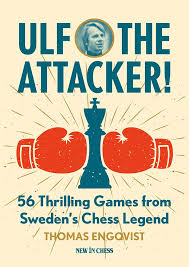
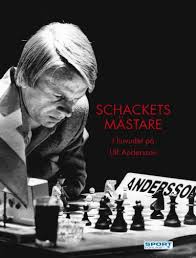
Läs de 8 kommentarernaEn svensk schackbok - Schackets mästare - I huvudet på Ulf Andersson - har äntligen skrivits om Ulf Anderssons makalösa bedrifter i schackvärlden. Glenn Ek på Sportförlaget i Västerås visade ett genuint intresse efter en förfrågan av författarna. Schack har de senaste årtiondena alltmer betraktats som en sport med den snabbare betänketiden så schack bör klassificeras även i det facket. Andra populära kategorier är annars spel, vetenskap eller konst. Frilansjournalisten och schackälskaren Robert Okpu har tillsammans med språkläraren och IM Thomas Engqvist arbetat med boken i ur och skur och den har sänts till tryckeriet och planeras att säljas under SM i Eskilstuna 5 juli. På Schack.se finns djupintervjuer med Okpu och Engqvist som var för sig ansvarat för biografi- respektive partidel. Det finns också en fotodel med fotografier som de flesta aldrig har sett tidigare. Boken bör alltså tilltala tre kategorier, de som gillar biografier, de som vill se Uffes angreppspartier med moderna, pedagogiska kommentarer och de som vill se de nya fotografierna. Den boken som saknats i den svenska schacklitteraturen har alltså äntligen skrivits....
Läs kommentarenEn av världens genom tiderna starkaste spelare, Ex-världsmästaren Vladimir Kramnik, 43 år, har på Tata Steel-turneringens hemsida meddelat att han avslutat sin professionella karriär. Bakgrunden är att han tycker han uppnått allt som kan uppnås som schackspelare och nu vill ägna sig åt att undervisa schack för barn. Han nämner att det han varit med om som schackspelare varit ovärderliga mänskliga erfarenheter. Vi som följt Kramniks schackkarriär och upplevt milstolpen i schackhistorien när han besegrade Kasparov år 2000, med remivapnet Berlinvarianten i Spanskt, får vara tacksamma och nöjda över alla de partierna han producerat ända fram tills nu och önska honom lycka till och all välgång med sina framtida projekt.
KommenteraAlingsås Schacksällskap fyller 100 år 2019 och som ett led i firandet kommer det att arrangeras en parturnering i Alingsås 4-5 maj.
Idag - 26 januari - är det premiär för turneringshemsidan.Jonas Dahlgren
Hello, all chess enthusiasts! I am an active tournament player and represent one of Sweden’s strongest clubs – Wasa SK. I am a trained educator (adult education teacher) and a highly experienced chess expositor. I am also an active author and have written ten chess books. Some of my most noteworthy coaching achievements at the World Championship level include being part of Stefan Winge’s team, which helped him secure second place in the Correspondence Chess World Championship in 2012. In China, I trained the young Zhu Yi, who achieved second place in the Under 12 World Championship in 2012.
My fundamental chess philosophy is inspired by the renowned Russian/French chess expositor Eugene Znosko-Borovskij (1884-1954), who believed that understanding is more crucial than rote memorization. Additionally, I incorporate ideas from the Chinese chess school, which emphasizes going through played games as a fundamental aspect of the pedagogical approach. It is much easier to progress in chess by actively playing and, together with the instructor, critically analyzing one’s games to discover both weaknesses and strengths. The best method to improve in chess is by finding a balance between gradually eliminating weaknesses and further developing one’s strengths. Communication between teacher and student ideally leads to a clear understanding of how one can progress toward one’s personal goals.
In addition to this, my teaching methods are unique, as each lesson aims to complement chess literature rather than heavily relying on references to it. It is essential for both me and the student that I can convey what I have learned through playing chess and interacting with strong players, not to mention all my private and public teaching hours over the decades. All this cannot be solely learned through printed words. Still, the chess book has not been written that truly expresses a chess player’s innermost thoughts and relevant experiences about chess. The significant advantage of taking private chess lessons is the ability to tailor the lesson to the student’s level and meet his or her specific needs. This can never be fully achieved with a chess book since it is usually written for a broad audience, aiming to appeal to as many target groups as possible. Furthermore, the student always has the opportunity, through his or her own engagement, to ask essential questions, thereby influencing and expediting his or her own developmental process.
For players residing in Stockholm, it is possible to arrange to meet in person, while for others, communication can be conducted via Skype, preferably using the Internet Chess Club (ICC) or a similar platform where it is convenient to move the pieces.
There are six other possibilities to take chess lessons:
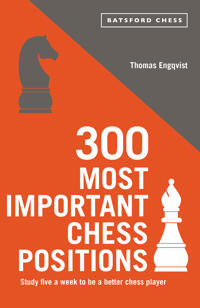
The first option is to be position-oriented and acquire ”300 Most Important Chess Positions” (Batsford, 2018), which presents the 300 most crucial positions, encompassing the essential positional ideas that players of all levels need to be familiar with. By assimilating and repeating these positions, you will significantly improve your playing strength relative to your rating. Knowing all these key positions will greatly aid your ability to recognize thematic elements in the opening, middlegame, and endgame. For instance, knowing a specific pawn endgame could be equivalent to knowing 50 different pawn endgames, but you need to know which key position it is. This is the only shortcut if you wish to improve rapidly and effectively. If you want concrete examples of this training method, you can read more in the following articles published on Schacksnack: here and here and here and here.
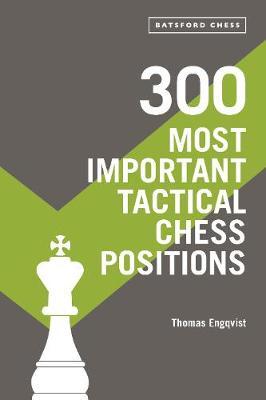
The second option is to acquire the book ”300 Most Important Tactical Chess Positions” (Batsford, 2021), which presents the 300 most critical tactical positions. By assimilating and repeating these positions, you will significantly improve your playing strength relative to your rating. Knowing all these tactical key positions will greatly aid your ability to recognize thematic elements in the opening, middlegame, and endgame. If you know a specific combination, opening trap, or attacking plan, you can apply the tactical theme in many other positions, but you must know which key position it is. You will also learn how to create these positions where there is a tactical way to decide the game. Naturally, you will be able to apply this method in your own games. This is the only shortcut if you wish to improve rapidly and effectively. If you want concrete examples of this training method, you can read the following articles published on Schacksnack: part 1, part 2, part 3, part 4, and part 5.
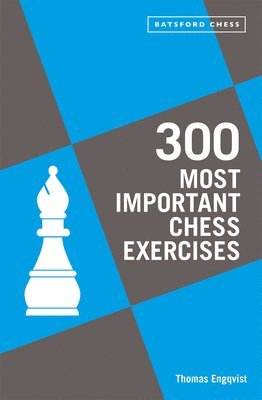
The third option is to acquire the test book ”300 Most Important Chess Exercises” (Batsford, 2022) to verify whether you have understood the most important positional and tactical ideas in the opening, middlegame, and endgame.
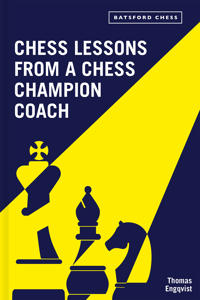
The fourth option is to obtain ”Chess Lessons from a Champion Coach” (Batsford, 2023) and assimilate the evolution of chess ideas from the Renaissance’s Ruy Lopez to our days with Magnus Carlsen.
The fifth option is to send one or more games via email tothomasengqvist@protonmail.comto receive feedback with the help of written comments. This could result in approximately two A4 pages per game, packed with pedagogical comments. You can see examples of this training method here and here.
The sixth option, which is free of charge, is to register on Thomas Engqvist’s channel and access my videos and video courses on YouTube. More information about this training concept can be found by clicking here.
Everyone is welcome to take chess lessons or receive assistance with preparations, regardless of level, from a rating of 1000 up to 3000. If you are interested in improving your game with a training program through live chess lessons, online lessons, or via email, or if you have any questions, feel free to write to thomasengqvist@protonmail.com for more detailed information.
The Women’s World Chess Championship match between defending champion Ju Wenjun and challenger Lei Tingjie is held in Shanghai and Chongqing, China, from 5-24 July, 2023. Don’t miss this epic battle with a prize fund of €500,000.
Commentators are Grandmasters Alik Gershon and Xu Yi.
The 2023 Women’s Chess World Championship sees defending World Champion Ju Wenjun face challenger Lei Tingjie in a 12-game, €500,000 title match in Shanghai and Chongqing, China. Jennifer Shahade and Jovanka Houska commentate.
The Women’s World Chess Championship match between defending champion Ju Wenjun and challenger Lei Tingjie is held in Shanghai and Chongqing, China, from 5-24 July, 2023. Don’t miss this epic battle with a prize fund of €500,000.
Commentators are Grandmasters Alik Gershon and Xu Yi.
The 2023 Women’s World Chess Championship sees defending World Champion Ju Wenjun face challenger Lei Tingjie in a 12-game, €500,000 title match in Shanghai and Chongqing, China. Alexandra Kosteniuk and Jovanka Houska commentate.
The Women’s World Chess Championship match between defending champion Ju Wenjun and challenger Lei Tingjie is held in Shanghai and Chongqing, China, from 5-24 July, 2023. Don’t miss this epic battle with a prize fund of €500,000.
Commentators are Grandmasters Alik Gershon and Xu Yi.
The 2023 Women’s Chess World Championship sees defending World Champion Ju Wenjun face challenger Lei Tingjie in a 12-game, €500,000 title match in Shanghai and Chongqing, China. Judit Polgar and Jovanka Houska commentate.
The 2023 Women’s Chess World Championship sees defending World Champion Ju Wenjun face challenger Lei Tingjie in a 12-game, €500,000 title match in Shanghai and Chongqing, China. Judit Polgar and Jovanka Houska commentate.
The Women’s World Chess Championship match between defending champion Ju Wenjun and challenger Lei Tingjie is held in Shanghai and Chongqing, China, from 5-24 July, 2023. Don’t miss this epic battle with a prize fund of €500,000.
Commentators are Grandmasters Alik Gershon and Xu Yi.
The 2023 Women’s World Chess Championship sees defending World Champion Ju Wenjun face challenger Lei Tingjie in a 12-game, €500,000 title match in Shanghai and Chongqing, China. Judit Polgar and Jovanka Houska commentate.
Most people consider Bronstein’s tournament book from 1953 to be the world’s best tournament book, but now another indispensable tournament book has been released in an English translation that can definitely compete with Bronstein’s. The one we are referring to is Keres’ book about the 1948 World Championship tournament. So, what does it mean for a tournament book to be of high quality? The perfect tournament book is the one that increases your playing strength when you go through the games. It should be pedagogical. Bronstein’s book was like that, and so is Keres’. From my own experience, I realized the value of centralizing the queen when I came across Bronstein’s classic. What he conveys cannot be found in any other book. I was so impressed by his ideas that I even managed to trap my queen in a game against Peter Backe in the Swedish Championship in Lindesberg in 1993. I later repeated this ”impossible” feat in a game against Bengt Lindberg in a weekend tournament in Västerås 2012.
Keres, among other things, implicitly conveys how to play correctly with the rooks. Naturally, these great players/authors provide many other insightful and pedagogical comments, so the general message is that the ambitious player should go through all the games at a moderate pace while assimilating the comments. It may be wise to underline the instructive comments to counteract the treacherous pitfalls of forgetfulness. After finishing the book, one can focus on the underlined parts. Since no book is tailor-made, you can make it so yourself with thoughtful markings, marginal notes, or underlines. It is wrong, as many people think, to believe that you shouldn’t write in a book because it makes it used. In fact, this method is the most convenient way to become a better chess player. Not only do you improve as a chess player by reading the book, but you also absorb the way chess was played at that time, as a natural meeting between generations occurs. Lastly, there is an entertaining aspect to enjoying this book, which ultimately makes chess training truly enjoyable. Who can resist such an almost perfect book?
The primary purpose of this tournament was to determine a new world champion since Alekhine tragically passed away as the world champion in 1946. The World Championship tournament took place two years later, before the King’s Indian and Sicilian revolution had come into effect. If one is interested in such games, the Zurich International Chess Tournament, 1953 should primarily be studied to gain background knowledge and an increased understanding of these complex systems. In Keres’ tournament book, there is only one King’s Indian and one Sicilian game. The dominant opening is the Spanish game. Therefore, it is an excellent book for e4 players and for black players who play classically. Keres’ comments are exceptionally pedagogical even in the opening, with many enriching textual explanations. The yellow highlighter will run out many times for those who are not too familiar with the open games or who want to switch to a solid system. The second most popular opening is the Grünfeld, so there is plenty of material even for the aggressive and dynamic black player like Grandelius.
We owe our gratitude to Jan Verendel for making it possible to finally (better late than never!) read the book in English. He created the ideal conditions for it and published it through his own Verendel Publishing. He put a lot of effort into the book for several years and was very pleased that it managed to be published in the magical year 2016, the year when Keres would have turned 100.
Verendel got the idea to translate the book when he heard that Kasparov and Gelfand had mentioned this book as one of the very best. In fact, Kasparov even claimed that this is one of the three best books in world literature. What are the other two? My System and ?. If there is one thing Kasparov is known for among the initiated, it is that he does not sprinkle praise unnecessarily. Verendel realized that this classic had been completely forgotten as it was only available in Russian or Estonian. He managed to find the book at a bookstore in Estonia and then translated it from Estonian during his spare time, which took four years. This also included other tasks such as contacting Keres’ family to buy the rights. GM John Shaw was contacted and became the language editor, as well as IM Ari Ziegler, responsible for layout and international distribution. The book sold about 600 copies in the first month, indicating that it will be a great success. The book can be purchased from Schackkompaniet for 275 SEK, which is a steal in this context. At the time of writing, there are 32 copies left, so take the opportunity before it’s too late. I know from my own experience that really good chess literature runs out too quickly, and then one is left to compete with chess collectors in auctions, where they drive up the prices even higher than the original price. The book is hardcover with a substantial content spread over 500 pages. It is an excellent book to have next to the chessboard in your study, and you can treat yourself to playing through one game five days a week. It would only take ten weeks to go through this brick since it contains 50 very well-commented games with giants like Botvinnik, Euwe, Fine, Keres, Smyslov, and Reshevsky. Each cycle consists of five rounds with 10 games, and Mr. Free round naturally reduced the number of games, but on the other hand, this provided a much-needed rest day for the players to create the best possible quality chess. Therefore, there was no need for quick draws as in our days with double rounds and tight schedules.
Any chess player or chess enthusiast who misses out on this book is making a mistake that they will probably regret for the rest of their chess life. Here is a little teaser for those who are considering not buying the book to show what potential non-buyers will miss out on.
Mikhail Botvinnik – Max Euwe World Chess Championship (4), 04.03.1948 [Keres]
How does White continue?
12.Rae1 White places his rooks in attacking positions, where they will later support the advance of the e- and f-pawns. For this reason, it is clear that the queen’s rook had to be played to e1, and not the king’s rook, which will later be needed on the f-file. (en typisk pedagogisk kommentar som boken kryllar av! red. anm.) Although White achieves splendid success with the text-manoeuvre, it is still not the strongest continuation and, on the contrary, gives Black the chance to equalize the position completely. It is apparent that Black’s main strategic plan is the …e5-e4 advance, as the …exd4 exchange would open up the e-file and give White a clear advantage. This advance is however not possible at the moment due to the simple reply Nxe4, as Black’s bishop on a5 is unprotected. Therefore one could expect Black to move the a5-bishop, most naturally to the c7-square. White had to thwart this, and it was possible with the positionally useful retreat 12.Ba2!. Now 12…Bc7 is no longer possible due to the reply 13.Nb5 , and secondly Black has to consider the threat of13.Nd5. If for example12…Bb6, then 13.Rae1! and Black has run out of reasonable moves. It seems that White could have maintained an opening advantage with 12.Ba2!, but the edge gradually vanishes after the hasty text-move.
The Women’s World Chess Championship match between defending champion Ju Wenjun and challenger Lei Tingjie is held in Shanghai and Chongqing, China, from 5-24 July, 2023. Don’t miss this epic battle with a prize fund of €500,000.
Commentators are Grandmasters Alik Gershon and Xu Yi.
The 2023 Women’s World Chess Championship sees defending World Champion Ju Wenjun face challenger Lei Tingjie in a 12-game, €500,000 title match in Shanghai and Chongqing, China. Alexandra Kosteniuk and Jovanka Houska commentate.
One of the greatest non-world champion chess players of all time is considered to be Akiba (Akiva; Akibah) Rubinstein (1882-1961). He belongs to a group of players like Aron Nimzowitsch, Salo Flohr, Leonid Stein, and Paul Keres who, due to various circumstances, didn’t get the chance to play a World Championship match. In the case of Rubinstein, it was the First World War that definitively disrupted his chess career at the highest level. The failure in St. Petersburg in 1914 also strongly contributed to Rubinstein losing all potential opportunities to challenge the then-World Champion Emanuel Lasker. During this time, Capablanca was considered the primary threat to Lasker, followed by Alekhine.
Rubinstein’s golden years as a chess player were 1907-1912, and according to Chessmetrics.com, his best year was 1913 when he achieved the astonishing rating of 2789 in June. The trend in 1914 shows a decline. After the First World War, Rubinstein was no longer seen as a main contender, and as we know, José Raül Capablanca had the opportunity to face the giant Lasker. However, Rubinstein is counted among the top four players in the world from 1907-1922. Therefore, Rubinstein is worth considering both for entertainment and educational purposes, especially during the period 1907-1912. In the first case, I can recommend the game Gersz Rotlewi – Akiba Rubinstein, Lodz 1907, and in the latter case, Akiba Rubinstein – Carl Schlechter, San Sebastian 1912.
If you want to acquire a book about this chess giant, as he truly was a giant even though he didn’t get to challenge for the World Championship title, he is considered one of the greatest, if not the greatest, when it comes to treating rook endgames. The most well-known book is Rubinstein’s Chess Masterpieces – 100 Selected Games (1941), annotated by Hans Kmoch and translated by Barnie F. Winkelman. This book has been highly recommended by the former World Champion Tigran Petrosian (1963-1969). For the English readership, later published works include volumes such as The Life & Games of Akiba Rubinstein Volume 1: Uncrowned king (2006) and The Life & Games of Akiba Rubinstein Volume 2: The Later Years (2011) by authors John Donaldson and Nikolay Minev. The difference between these books and Kmoch’s book is that the former is based on all the played games of Rubinstein, including recently discovered games from Ostende 1906, while the latter is based on a selection of Rubinstein’s best and most instructive games. There is also another recommended book in English called Akiba Rubinstein’s Chess Academy compiled by Viktor Glatman, with comments by GM V. Chekhov, B. Gelfand, A. Huzman, A. Khalifman, M. Krasenkov, S. Lputian, I. Novikov, E. Pigusov, Y. Razuvaev, and P. Swidler, to name just a few of the great names.
If you want to acquire a book that truly does justice to his stature, one of the most renowned books in the former Soviet Union (before the Commonwealth of Independent States) is Akiba Rubinstein (1980) by Yuri Razuvaev and Valery Murakhver. This book had an excellent reputation and has always been highly recommended by Boris Gelfand, the former challenger to Viswanathan Anand at Moscow in 2012. I remember when I was younger, I lamented the fact that this book was not available in English, but now this hefty book (571 pages), believe it or not, is available in English thanks to the tremendous and diligent work of Jan Verendel, the editor of Verendel Publishing. Another person who deserves mention is the translator, Andrey Deviatkin, who has also provided data analysis in the footnotes. Thanks to Deviatkin’s translation, we can not only enjoy commentary on the selection of games but also delve into highly interesting chapters such as ”In the Footsteps of Steinitz” (Murakhveri), ”Rubinstein and chess theory,” and ”The Endgame” (Razuvaev). Many of you reading this review are surely aware that Verendel previously released a new translation of the hefty book World Chess Championship 1948 (544 pages) with comments by Estonian Grandmaster Paul Keres, also known as ”The eternal second.” This book received great reviews worldwide, and I am convinced that the Rubinstein work will receive similar acclaim. The cover is much more appealing compared to the one for Keres, with the title Akiba Rubinstein written in gold text while he kindly looks at us from another time.
The book has many merits, including a wealth of color photographs. This technique involves adding colors to a black-and-white or tinted photographic image to recreate the original scene’s colors. It is done to provide a more vivid and realistic visual experience of the photographed subject, especially for historical images where color photography was not available at the time the photo was taken. Such photographs can have artistic or historical significance and are often used to add a new dimension to black-and-white or tinted images. To my knowledge, this is the first time in chess book history that such photographs have been presented, making it easier for readers and viewers to step into a bygone era. It is not very common for chess literature to make an effort to find new images, especially ones that have been colorized, so a tremendous amount of effort has gone into the production of this book. I know because I was one of the many who proofread the book. Verendel put so much work into ensuring the best possible proofreading that he even printed ten copies in a stapled form in advance and distributed them to all the proofreaders. So if you manage to find any errors or peculiarities in the text, you can congratulate yourself.
The price of 45 Euros is affordable in my opinion. The best way to purchase the book is directly from Jan Verendel’s website, and for Swedish readers, the postage is 109 SEK. This means that you can get the book delivered to your mailbox for just over 500 SEK, which is a worthwhile investment as Rubinstein has never been presented in such a comprehensive hardcover book before. Unfortunately, many publishers fail to understand the importance of publishing hefty hardcover books. This applies to reputable publishers like New in Chess and Everyman Chess. I believe that chess publishers who release substantial works in the field of chess history have a lot to gain from it, especially if the books also include meticulously produced photographs. Many chess enthusiasts are eagerly awaiting this type of book, but at present, there is essentially only one available, with the exception of the American publisher McFarland.





 Laddar ...

Senaste kommentarer