

dec 11
Kommentera
Schacksnack har en ny omröstning längst upp i högerspalten. Frågan gäller huvuvida Gideon Ståhlberg, Ulf Andersson eller Nils Grandelius är att betraktas som Sveriges genom tiderna starkaste schackspelare. Det finns ju lite olika måttstockar att beräkna detta genom till exempel ratingprestationer, hårt motstånd över tid eller hur vederbörande har bidraget till schackets utveckling. Beroende på perspektiv och hur insatt man är i denna komplexa fråga kan svaren skifta. Vad säger Schacksnacks läsare?
Kommentera
Sverigemästarklassen och övriga grupper arrangeras i Uppsala 27 juni - 6 juli. Tio spelare kämpar om Sverigemästartiteln och dessa är i ratingordning: GM Platon Galperin, IM Isak Storme, IM Jung Min Seo, GM Erik Blomqvist, IM Martin Lokander, GM Tiger Hillarp Persson., IM Milton Pantzar, IM Hampus Sörensen GM Jonny Hector och IM Axel Falkevall. SM-gruppen är i år stark och öppen så nästan vem helst kan ta hem segern men det skulle inte vara osannolikt om GM Jonny Hector avgår med segern. I SM-sammanhang brukar gedigen erfarenhet väga mycket tyngre än tillfälliga ratingtoppar. Mästar-Elit: IM Michael Wiedenkeller, IM Ludvig Carlsson, IM William Olsson, FM Eric Thörn, IM Tommy Andersson, IM Bengt Lindberg, FM Joar Östlund, FM Alexander Ström-Engdahl, Andreas Landgren och Harald Ljung. Mitt stalltips är att FM Joar Östlund som är en starkt utvecklande spelare kommer att avancera till Sverigemästarklassen.
KommenteraSchacksnack har inlett det nya året med en ny omröstning. Frågan gäller huruvida du föredrar Fischer Random, där pjäserna slumpas på den sista raden, eller om du föredrar europeiskt schack som det har spelats sedan 1500-talet och där det på förhand är bestämt att vit dam ska stå på ruta d1. Det förstnämnda alternativet har fördelen att kreativiteten ökar i spelöppningsfasen, medan det senare alternativet har för- eller nackdelar, beroende på hur man ser på det, i och med att man måste kunna och förstå en mängd spelöppningar och varianter. Rösta en gång på svarsalternativ 1 eller 2 i högerspalten nedan.
KommenteraDen sjunde upplagan av Sinquefield Cup börjar idag och nyheten för året är att tävlingen, som för övrigt är den starkaste i U.S.A, spelas med 12 deltagare istället för 10. I första ronden har vi dessa möten: Ding Liren-Wesley So, Levon Aronian-Maxime Vachier-Lagrave, Magnus Carlsen-Anish Giri, Ian Nepomniachtchi-Wiswanathan Anand, Hikaru Nakamura-Fabiano Caruana och Sergej Karjakin-Shakhrijar Mamedjarov. Carlsen är givetvis stor favorit och vill förstås revanschera sig efter att inte ha tagit de snabbare partierna, som spelades för några dagar sedan, på blodigt allvar. Det lär han dock göra denna gång om han inte ska förlora sitt anséende som världsmästare och undvika förödmjukande skriverier i norsk massmedia som inte riktigt förstår skillnaderna på blixtschack, snabbschack och klassiskt schack. Enligt Carlsen är det nämligen den sistnämnda spelformen som är den seriösaste. Sinquefield Cup saknar dock tyvärr dragserie vilket skulle ha lyft den spelformen ett steg i rätt riktning. Chris Bird är tävlingsledare
Läs de 3 kommentarernaIdag börjar Sverigemästarklassen sina tävlingar under SM i Eskilstuna. Lottningen i första ronden: GM Jonny Hector- GM Pontus Carlsson, FM Kaan Kücüksan-GM Axel Smith, IM Linus Johansson-GM Tiger Hillarp Persson, GM Pia Cramling-IM Rauan Sagit, GM Erik Blomqvist-IM Michael Wiedenkeller. SM-gruppen är både stark och öppen så vem helst kan ta hem segern. En farlig uppstickare som Kücüksan kan absolut inte räknas bort. Det var längesedan vi hade ett sådant jämnt SM och detta beror på att GM Nils Grandelius och GM Hans Tikkanen inte är med och kämpar om Sverigemästartiteln. Den förstnämnde har inte rosat SM-marknaden, som han borde, med tanke på sin super-GM-status, och Tikkanen är säkert mätt på SM-titlar och har andra prioriteringar.
Mästar-Elit: FM Harald Lögdahl-IM Dan Cramling, FM Erik Malmstig-IM Tommy Andersson, IM Bengt Lindberg-Anders Wengholm, Joakim Nyander-FM Jung Min Seo, FM Tom Rydström-GM Thomas Ernst. Mitt stalltips är att Lindberg blir en tuff nöt för de övriga deltagarna att knäcka.
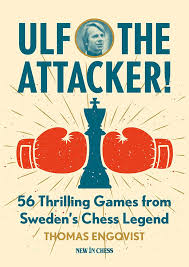
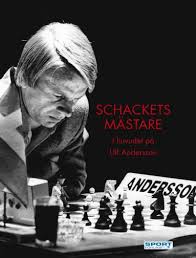
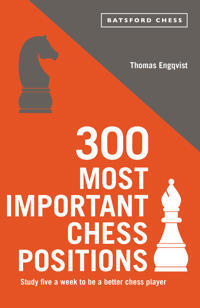
Läs de 8 kommentarernaEn svensk schackbok - Schackets mästare - I huvudet på Ulf Andersson - har äntligen skrivits om Ulf Anderssons makalösa bedrifter i schackvärlden. Glenn Ek på Sportförlaget i Västerås visade ett genuint intresse efter en förfrågan av författarna. Schack har de senaste årtiondena alltmer betraktats som en sport med den snabbare betänketiden så schack bör klassificeras även i det facket. Andra populära kategorier är annars spel, vetenskap eller konst. Frilansjournalisten och schackälskaren Robert Okpu har tillsammans med språkläraren och IM Thomas Engqvist arbetat med boken i ur och skur och den har sänts till tryckeriet och planeras att säljas under SM i Eskilstuna 5 juli. På Schack.se finns djupintervjuer med Okpu och Engqvist som var för sig ansvarat för biografi- respektive partidel. Det finns också en fotodel med fotografier som de flesta aldrig har sett tidigare. Boken bör alltså tilltala tre kategorier, de som gillar biografier, de som vill se Uffes angreppspartier med moderna, pedagogiska kommentarer och de som vill se de nya fotografierna. Den boken som saknats i den svenska schacklitteraturen har alltså äntligen skrivits....
Läs kommentarenEn av världens genom tiderna starkaste spelare, Ex-världsmästaren Vladimir Kramnik, 43 år, har på Tata Steel-turneringens hemsida meddelat att han avslutat sin professionella karriär. Bakgrunden är att han tycker han uppnått allt som kan uppnås som schackspelare och nu vill ägna sig åt att undervisa schack för barn. Han nämner att det han varit med om som schackspelare varit ovärderliga mänskliga erfarenheter. Vi som följt Kramniks schackkarriär och upplevt milstolpen i schackhistorien när han besegrade Kasparov år 2000, med remivapnet Berlinvarianten i Spanskt, får vara tacksamma och nöjda över alla de partierna han producerat ända fram tills nu och önska honom lycka till och all välgång med sina framtida projekt.
KommenteraAlingsås Schacksällskap fyller 100 år 2019 och som ett led i firandet kommer det att arrangeras en parturnering i Alingsås 4-5 maj.
Idag - 26 januari - är det premiär för turneringshemsidan.
Jonas Dahlgren
dec 07
In this episode, IM Thomas Engqvist presents and analyses no. 26 in the Top 30 Chess Books series: Igor Zaitsev – Attacking the Strongpoint (2020). While Steinitz spoke of attacking the opponent’s weakest point, Lasker emphasised psychology, and Nimzowitsch championed prophylaxis, Zaitsev offers a strikingly different perspective: the deliberate attack on a strongly defended point. Over-protecting a key square or pawn, he argues, can invite a powerful assault precisely because it is so heavily guarded — a principle that also mirrors the battlefield strategies of Alexander the Great, which is discussed in detail.
Engqvist refer to this as the Alekhine–Zaitsev concept, since both players consciously and systematically demonstrated that a well-prepared attack on a fortified point can increase activity, dynamism, and ultimately undermine the opponent’s structure — but only once one’s own position has been strengthened through the accumulation principle. Elements of the idea can be found in the games of Paulsen and Steinitz, although they did not fully formulate it as a structured concept. Classic examples include Steinitz–von Bardeleben, Hastings 1895, along with many instructive games by Alekhine and Zaitsev himself.
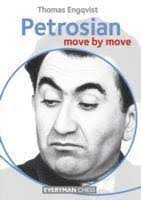
He also examine Zaitsev’s combinational style. A deeply original player, he introduced many ideas later adopted by Karpov in World Championship matches against Korchnoi and Kasparov. Born on 27 May 1938, Zaitsev served as a leading trainer and coach from 1971 to 1991, working with Polugaevsky, Petrosian, and Karpov. Remarkably, Attacking the Strongpoint is his only book, published in 2020 by Russell Enterprises.
dec 07
Join chess enthusiast Björn Knöppel for a clear, engaging and insightful 45-minute exploration of one of the most dramatic moments in chess history: Garry Kasparov’s sensational 19-move loss with Black in the Caro–Kann Defence to IBM’s supercomputer Deep Blue in 1997.
Filmed by IM Thomas Engqvist, this presentation draws inspiration from Bruce Pandolfini’s Kasparov and Deep Blue: The Historic Chess Match Between Man and Machine (1997). Knöppel offers an accessible walk-through of the 1997 match while also revisiting the closely related 1996 encounter. He discusses each game verbally before carefully analysing, in detail, the decisive game that Kasparov lost — highlighting strategic ideas, psychological turning points and the broader significance of the event.
Presented in a friendly, welcoming and informative style, this video is suitable for viewers of all levels — from newcomers to long-time chess enthusiasts — and provides historical context as well as fresh insights into a match that reshaped the relationship between humans and machines forever.
dec 02
A five-time world champion Vishy Anand explains how he manages to compete at the top level although being semi-retired, the generational differences, and much more.
dec 02
Top 30 Chess Books – #25 | Alexander Shashin; Best Play – A New Method For Discovering The Best Move
In this video, IM Thomas Engqvist explores Best Play – A New Method For Discovering The Best Move by Alexander Shashin, a revolutionary book aimed at intermediate and advanced players. Shashin introduces a completely new approach to evaluating positions and selecting moves, reducing the typical 5–7 candidate moves to just 2–3, making decision-making far more precise. The method is built around five key elements: material, time, king safety, compactness (density), and spatial expansion (elevation). These are analysed using algorithms inspired by Tal’s attacking style, Capablanca’s strategic manoeuvring, and Petrosian’s defensive mastery. Join Thomas as he breaks down this innovative system and demonstrates how it can transform your understanding of chess.

 Laddar ...
Senaste kommentarer