

How can we study chess in a way that resembles the experience of playing a real tournament game?
In this course, I introduce seven different methods of chess study, each designed to develop a different aspect of your playing strength. I will explore all seven methods in depth, explaining not only what to do, but also how to practise them effectively and why they work.
The first method is simulation training.
Simulation is one of the most fascinating and, in my opinion, most effective ways of studying chess because it closely resembles what actually happens in a tournament game. Instead of simply looking at moves played by a great player, you try to put yourself in that player’s position and make the decisions yourself.
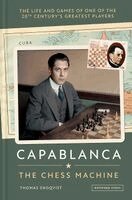
This is a method I personally worked with extensively in the late 1980s and early 1990s, when I carried out simulation training based on the games and styles of players such as Leonid Stein, Mikhail Tal, Mikhail Chigorin, Wilhelm Steinitz, José Raül Capablanca and Alexander Alekhine.
The idea was to reconstruct the decision-making process of these great players. I would take one of their games, hide the moves that had actually been played, and try to find the moves myself — attempting, as far as possible, to think and make decisions according to the character and playing style of the particular player.
There are several ways of carrying out simulation training.
Some methods are very time-consuming but extremely rewarding, while others require considerably less time but can still provide substantial benefits. In this course, I explain different approaches and discuss how you can adapt the method to the amount of time you have available.
The deeper purpose of simulation training is not simply to guess the moves of a famous player. It is to train yourself to make decisions under conditions that resemble a real game.
You have to evaluate the position, identify the important features, formulate a plan, calculate variations, make practical decisions and finally commit to a move — without knowing what the original player actually played.
This makes simulation fundamentally different from passive study. You are not merely observing a master; you are trying to become the player.
The seven methods of Chesslovers Academy
Simulation is only the first of seven systematic study methods that I will explore in this course series.
Each method approaches chess improvement from a different angle. Together, they form a practical framework for studying chess more effectively and for transforming the way you use your time away from the board.
The aim is not to accumulate more chess information, but to develop better thinking habits, decision-making skills, practical understanding and independent judgment.
If you are serious about improving your chess and want to discover more effective ways of studying the game, I invite you to explore Chesslovers Academy.
Chesslovers Academy costs only 5 dollars per month and gives you access to the courses devoted to these seven study methods, with each method examined thoroughly through concrete examples and practical exercises.
Study efficiently. Think independently. Improve systematically.
IM Thomas Engqvist

 Laddar ...
Senaste kommentarer